
Paying cash
The simplest route
No U.S. mortgage approval, faster closings and a stronger negotiating position. Plan the conversion in advance and convert at a favourable rate.

International buyers
Pick your country. Each guide has its own tools: today's official rate, the U.S. estate-tax picture and the total cost to buy. Canada: the CAD converter and the snowbird day counter.
 Canada
0.7012 USD
Toronto
Open the guide →
 Colombia
3,156.32 COP per USD
Bogotá
Nonstop about 3h45
Open the guide →
 Argentina
1,524.50 ARS per USD
Buenos Aires
Nonstop about 9h
Open the guide →
 Mexico
18.48 MXN per USD
Mexico City
Nonstop about 3h40
Open the guide →
 Brazil
5.0564 BRL per USD
São Paulo
Nonstop about 8h30
Open the guide →


 Other countries
Chile, Peru, Venezuela, Ecuador, Uruguay, Panama, Guatemala and the Dominican Republic
Compare 12 countries →
MIAMI REALTORS members closed 5,300 sales to foreign buyers in the year to July 2025, worth $4.4 billion, from 55 countries. Rates refresh live from each country's official or reference feed; clocks follow your device.
Every foreign buyer
Whatever country you buy from, these U.S. and Florida rules are the same. Status as of October 20, 2026, each with its official source.
Buying a home gives no visa or residency. A personal residence is expressly excluded from the EB-5 investor green card.
8 CFR 204.6(e)The E-2 is for nationals of treaty countries only and requires a real operating commercial enterprise. Speculative or idle investment does not qualify, so a passively rented home does not either.
DS-156E instructions · 8 CFR 214.2(e)An investment of $1,050,000, or $800,000 in a targeted employment area. The regional center program is authorized through September 30, 2027, and the amounts adjust for petitions filed from January 1, 2027.
USCISCreated by Executive Order 14351: a $1,000,000 contribution plus a $15,000 USCIS fee per person (Form I-140G). It is not tied to real estate, and a federal lawsuit against the program is pending.
EO 14351 · USCIS I-140GA non-resident's U.S. assets above $60,000 require a U.S. estate-tax return, and U.S. real estate counts. The credit is $13,000 and rates reach 40%, against a $15 million exemption for U.S. citizens and residents in 2026. No Latin American country has an estate-tax treaty with the U.S. On the rate table, before deductions, a $500,000 condo held personally works out to about $142,800, and a $1,000,000 condo to about $332,800.
IRS treaties · IRS · 26 U.S.C. 2001(c) · IRS 2026The buyer withholds 15% of the price. It is 0% up to $300,000 and 10% above that up to $1,000,000 when the buyer will live in the home (at least half the days in each of the first two years). Form 8288-B can reduce the withholding; the IRS generally acts within 90 days. Estimate it below.
IRS FIRPTA · IRS 8288-BBy default 30% of the gross rent is withheld for the IRS. You can elect to be taxed on net income instead (Form W-8ECI to the payer) and deduct expenses, but it takes an ITIN and a U.S. return filed on time.
IRS Pub 519 · IRS ECI · IRS ITINFlorida's homestead exemption requires permanent residence, which a person on a temporary visa cannot meet. Without it, the assessed value of a home can still rise only up to 10% a year.
Fla. Admin. Code 12D-7.007Florida's documentary stamp tax on deeds is $0.70 per $100 statewide. In Miami-Dade it is $0.60 per $100 plus a $0.45 surtax that does not apply to single-family homes; ask the title company how it applies to a condo.
Florida DOREvery Florida buyer signs an affidavit at closing under the state's foreign-ownership law (SB 264). Its purchase restrictions apply only to "foreign principals" from the countries the law lists.
Fla. Stat. 692.201 · FREC Rule 61J2-10.200By statute, deposits up to 10% of the price must sit in escrow. Amounts above that can be used for construction if the contract allows it.
Fla. Stat. 718.202General education, not legal or tax advice. Rules change; confirm with a cross-border CPA or attorney. Get introduced to cross-border pros →
Cross-border toolkit
What your home-currency budget buys in Miami.
Fetching today's reference rate…
Each rate shows its source and date: the official rate where the country publishes one (Colombia's TRM, the BCRA quote for Argentina), the ECB reference rate for the euro, the Canadian dollar and others. Banks and currency specialists quote their own rates. Chile, Peru, Uruguay, the Dominican Republic and Guatemala: Rates By Exchange Rate API.
U.S. rules generally require the buyer to withhold part of a foreign seller's sale price at closing.
It's a deposit, not your final tax: you file a U.S. return to reconcile, and sellers often recover part of it. Plan for the cash-flow gap before you list.
Standard statutory withholding tiers; exceptions and paperwork apply, and rules change. Confirm the current treatment with a cross-border CPA before selling.
Compare 12 countries
The same Miami condo comes with different rules depending on where you live and which passport you hold. Where each country stands, from the official sources.
| Country | E-2 investor visa | U.S. income-tax treaty | U.S. estate-tax treaty | Visa Waiver | U.S. entry restrictions | Home-country money rule to know |
|---|---|---|---|---|---|---|
| Colombia | Yessince 1948 | No | No | No | None | Money sent from Colombia goes through the regulated FX market with an exchange declaration; funds already abroad don't. DIAN Form 160 if foreign assets exceed 2,000 UVT. 4x1000 tax on transfers (confirm with your bank).Money sent from Colombia goes through the regulated FX market with an exchange declaration; funds already abroad don't. DIAN Form 160 if foreign assets exceed 2,000 UVT. 4x1000 tax on transfers (confirm with your bank). |
| Argentina | Yessince 1854 | Noinformation-exchange agreement only | No | No | None | Currency controls for individuals lifted April 14, 2025 (BCRA A 8226). As of February 2026, buying at the official rate blocked MEP or CCL trades for 90 days, and vice versa (A 8336): confirm it still applies. Bienes Personales tax on worldwide assets.Currency controls for individuals lifted April 14, 2025 (BCRA A 8226). As of February 2026, buying at the official rate blocked MEP or CCL trades for 90 days, and vice versa (A 8336): confirm it still applies. Bienes Personales tax on worldwide assets. |
| Brazil | No | No | No | No | None | IOF on currency exchange: 3.5% general, 1.1% for investment abroad; your bank classifies the transfer (confirm which applies). Foreign assets of US$1M or more are reported to the Banco Central (CBE). Law 14,754/2023 taxes offshore companies' profits yearly at 15%.IOF on currency exchange: 3.5% general, 1.1% for investment abroad; your bank classifies the transfer (confirm which applies). Foreign assets of US$1M or more are reported to the Banco Central (CBE). Law 14,754/2023 taxes offshore companies' profits yearly at 15%. |
| Mexico | Yessince 1994 | Yesin force Dec 28, 1993 | No | No | None | No currency controls. Mexican banks cap individuals' U.S.-dollar cash deposits at about $4,000 a month.No currency controls. Mexican banks cap individuals' U.S.-dollar cash deposits at about $4,000 a month. |
| Venezuela | No | Yeseffective Jan 1, 2000 | No | No | RestrictedImmigrant visas and B-1/B-2, F, M and J visas suspended (Proclamations 10949 and 10998) | Florida's foreign-ownership law (SB 264) still lists "the Venezuelan regime of Nicolás Maduro" in the 2026 statutes; how that applies after January 2026 is unsettled. The closing attorney or title company handles the buyer affidavit.Florida's foreign-ownership law (SB 264) still lists "the Venezuelan regime of Nicolás Maduro" in the 2026 statutes; how that applies after January 2026 is unsettled. The closing attorney or title company handles the buyer affidavit. |
| Peru | No | No | No | No | None | No currency controls. 0.005% ITF tax on bank transactions.No currency controls. 0.005% ITF tax on bank transactions. |
| Chile | Yessince 2004 | Yesin force Dec 19, 2023 | No | Yesthe only one in Latin America | None | No currency controls. New Central Bank FX reporting rules from January 1, 2026: ask your bank whether your transfer must be reported.No currency controls. New Central Bank FX reporting rules from January 1, 2026: ask your bank whether your transfer must be reported. |
| Ecuador | Restrictedonly investments in place before May 18, 2018, until May 18, 2028 | No | No | No | None | Dollarized. 5% exit tax (ISD) on funds leaving Ecuador above a small exemption; whether it reaches funds already abroad: confirm with your advisor.Dollarized. 5% exit tax (ISD) on funds leaving Ecuador above a small exemption; whether it reaches funds already abroad: confirm with your advisor. |
 Dominican Republic | No | No | No | No | None | Generally free currency convertibility.Generally free currency convertibility. |
 Uruguay | No | No | No | No | None | No currency controls. Mostly territorial income tax.No currency controls. Mostly territorial income tax. |
 Panama | Yessince 1991 | No | No | No | None | Dollarized. Territorial income tax.Dollarized. Territorial income tax. |
 Guatemala | No | No | No | No | None | No transfer restrictions. Foreign-currency cash deposits above $3,000 a month need a sworn statement.No transfer restrictions. Foreign-currency cash deposits above $3,000 a month need a sworn statement. |
No Latin American country has an estate-tax treaty with the U.S., so a non-resident's U.S. property above $60,000 can owe U.S. estate tax. Status as of October 20, 2026. Sources: State Department E-2 treaty list, IRS income-tax treaties, IRS estate-tax treaties, DHS Visa Waiver Program, Proclamation 10949, Proclamation 10998, plus each country's central bank and tax authority, listed on the country guides. General education, not legal or tax advice. Rules change; confirm with a cross-border CPA or attorney.
How you buy
Decide how much to deploy and plan the currency conversion in advance. Many buyers use a currency specialist rather than a retail bank counter. Proof of funds makes your offers strong.
Live video tours, neighborhood intelligence and real comps, so you can shortlist and make offers with confidence from home.
Offers backed by comps, a deposit wired to escrow, inspections handled by my on-the-ground team. Cash closings move fast.
Remote notarization, wire transfers and, if needed, a power of attorney. Most international buyers never fly down to close. Title insurance protects the purchase.
A lender who works with foreign nationals tells you your real budget. Expect a larger down payment than at home and extra documentation. Get it in writing before you shop.
Live video tours, neighborhood intelligence and real comps, so you can shortlist and make offers with confidence from home.
Offers backed by comps; the lender orders an appraisal and underwrites the file. Financed closings take a bit longer, and we build that into the offer timeline.
Remote notarization, wire transfers and, if needed, a power of attorney. Most international buyers never fly down to close. Title insurance protects the purchase.
No U.S. mortgage approval, faster closings and a stronger negotiating position. Plan the conversion in advance and convert at a favourable rate.
Several lenders specialize in financing U.S. property for foreign nationals. Expect a larger down payment than at home and extra documentation. Terms vary by lender, so get a written quote before you budget.
A starting point for the math, not a foreign-national quote. Your lender's written terms are the real number. Freddie Mac, Oct 8, 2026.
Compare from anywhere
Every building page shows what has sold there, what is listed today and the building facts.
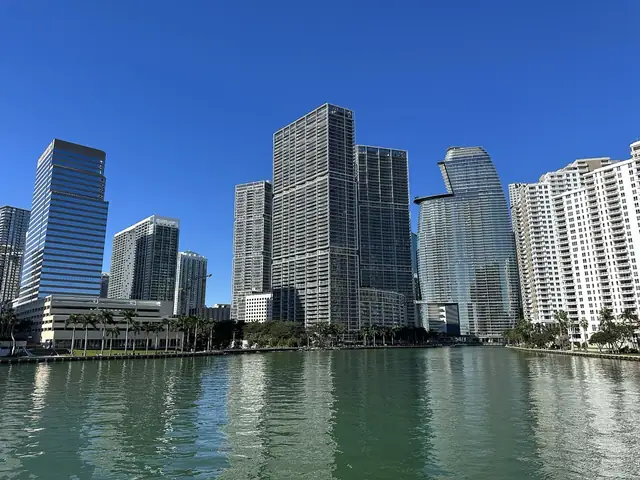
The financial district: towers near offices, restaurants and the free Metromover.
Every building →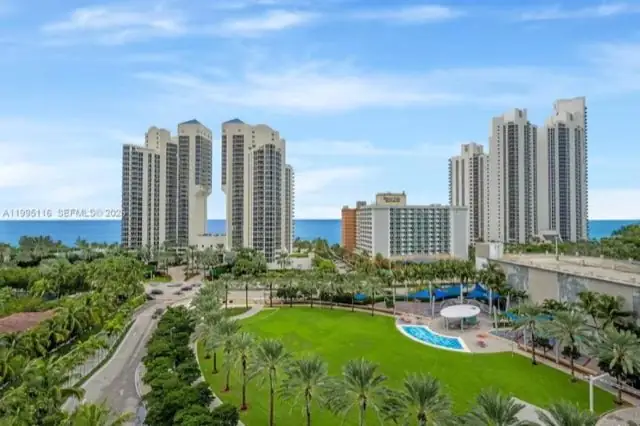
Oceanfront towers on a narrow strip between the Atlantic and the bay.
Every building →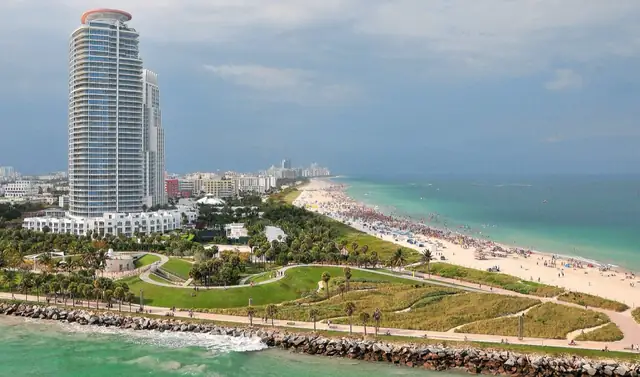
From Art Deco walk-ups to South of Fifth towers.
Every building →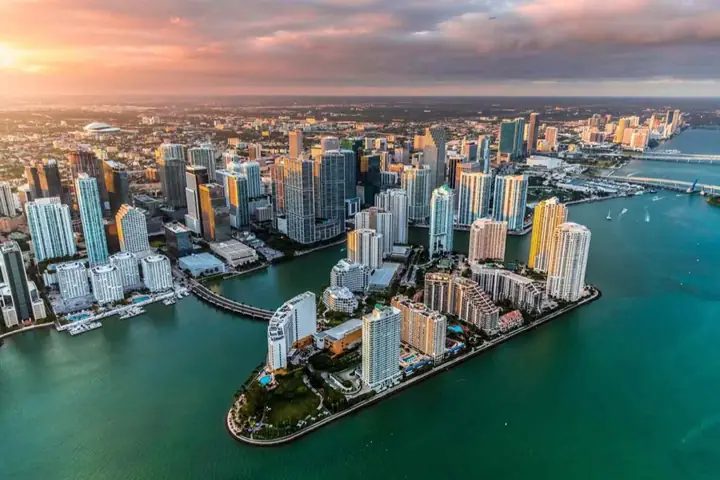
CondoHub: filter by neighborhood, year built and what is on the market.
Open CondoHub →Keep a shortlist in My Miami and send it to me when you are ready. I will tell you what each building costs to own from abroad.
International buyer FAQ
Not covered here? Ask me on WhatsApp, which works worldwide, or call 786-578-6900.
Start here
Share a few details and I'll map out the process for your situation, and introduce you to the cross-border lenders, CPAs and attorneys who handle international clients every day. No pressure, no obligation.

Buy from home. I'll be your eyes here.Live video tours, a straight read on every building, and the cross-border lenders, CPAs and attorneys to get it done, on your time zone.